£3.99
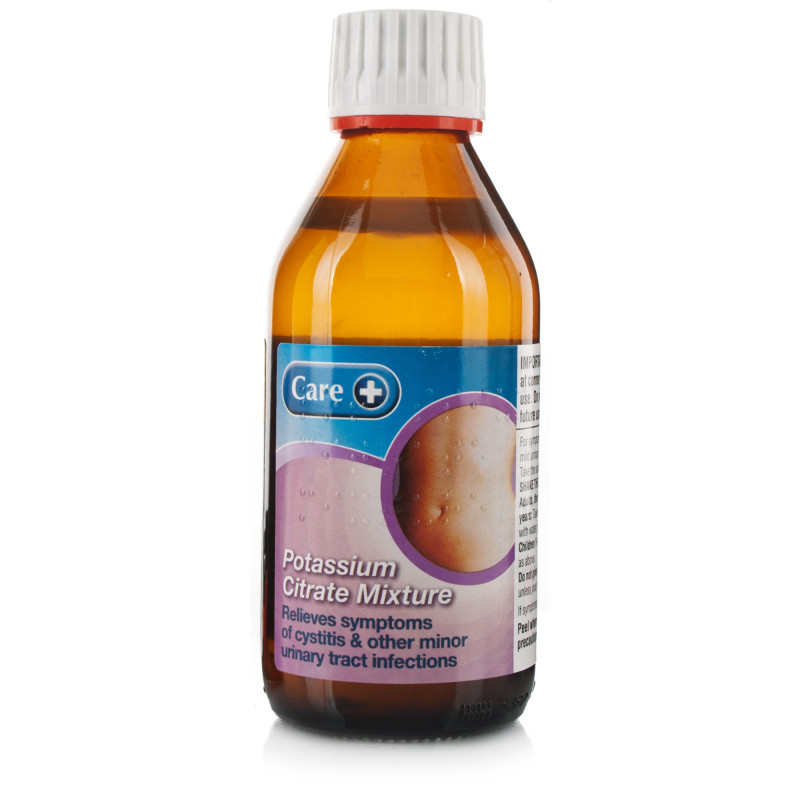
Potassium Citrate Mixture 200ml helps relieve the discomfort of urinary tract infections and cystitis. Its gentle, alkalising formula works to reduce acidity in the urine, easing pain and irritation.
Potassium Citrate Mixture is a fast-acting urinary alkaliniser used to relieve the painful symptoms of cystitis and other mild urinary tract infections (UTIs). It works by reducing urine acidity, which can ease burning and stinging when passing urine. If you want to buy potassium citrate mixture online in the UK, choose a reputable provider and follow the dosing instructions carefully.
Potassium citrate is an alkalinising agent. In a mixture form, it is taken diluted with water to help make urine less acidic. Less acidic urine can be less irritating to the bladder and urethra, which may reduce discomfort while you recover.
You may consider potassium citrate mixture if you have:
Potassium citrate mixture helps relieve symptoms by alkalinising urine. It does not kill bacteria. If symptoms persist, worsen, or recur frequently, seek medical advice. Some cases require assessment and antibiotics.
Potassium citrate helps neutralise excess acid in urine, making it more alkaline. This can reduce bladder irritation and help ease pain and burning sensations when passing urine.
Under medical supervision, potassium citrate may also be used for conditions such as renal tubular acidosis and to help prevent certain kidney stones.
Always follow your label directions or pharmacist instructions. Typical doses include:
Drink plenty of water while using potassium citrate mixture to support recovery and help flush the urinary tract.
Some people may experience mild nausea, upset stomach, diarrhoea, or vomiting.
Confusion, irregular heartbeat, muscle weakness, severe stomach pain, or persistent vomiting require urgent medical advice.
Alongside potassium citrate mixture, you may find these steps helpful:
If you’re buying potassium citrate mixture online, ensure the product includes clear dosing instructions and safety warnings. If you have severe symptoms, are pregnant, have recurrent UTIs, or develop fever/back pain/blood in urine, seek medical advice rather than relying on self-treatment.
It is used to relieve discomfort from cystitis and mild urinary tract infections by reducing urine acidity.
No. It helps with symptom relief but does not kill bacteria. If symptoms persist, you may need assessment and antibiotics.
Many people notice relief within 24–48 hours, but response varies.
Typical dosing is 10ml diluted with water three times daily after meals (adults and children over 6), but follow your label or pharmacist advice.
Children over 6 years may take 10ml three times daily; children 1–6 years may take 5ml three times daily. Children under 1 year are not recommended.
Men with urinary symptoms should seek medical assessment, as infections in men can be more serious.
It can be taken alongside antibiotics for comfort, but confirm with a pharmacist if you take other medicines.
Yes, under medical supervision. It can help make urine less acidic and may reduce certain stone formation risks.
Avoid if you have kidney disease, Addison’s disease, high potassium levels, or an allergy to ingredients.
Mild nausea, upset stomach, diarrhoea, or vomiting can occur. Seek urgent advice for confusion, irregular heartbeat, or muscle weakness.
Fever, back/groin pain, blood in the urine, severe abdominal pain, or feeling very unwell should be assessed urgently.
Some formulations contain aspartame, which may be relevant for people with phenylketonuria (PKU). Check your label.
Store below 25°C, keep out of children’s reach, and use within 2 months of opening.
Hydration, avoiding bladder irritants (coffee/alcohol), and using suitable pain relief may help. Seek advice if symptoms persist.


Reviews
There are no reviews yet.