£7.29
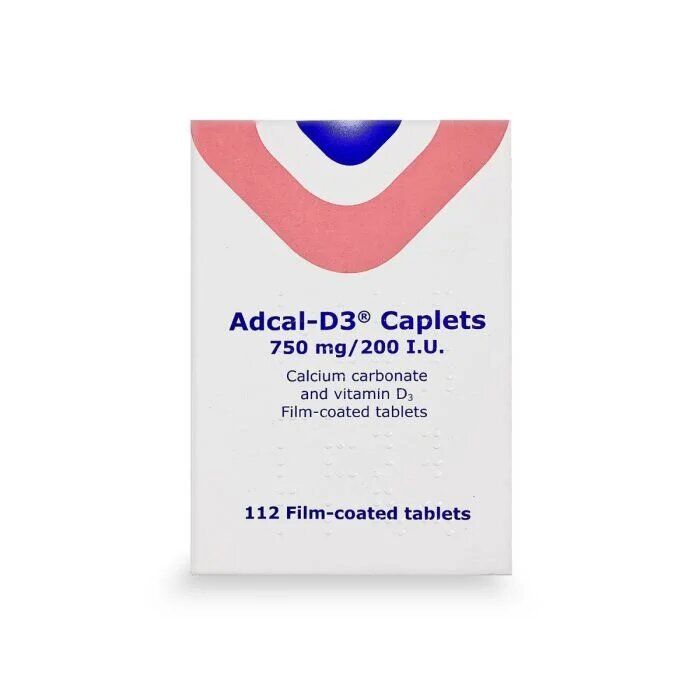
Adcal-D3 Caplets 750mg/200 I.U. provide calcium and vitamin D3 to support strong bones and teeth. The dual-action formula helps maintain healthy calcium levels and promotes effective absorption for optimal bone health.
Adcal-D3 Caplets are a combined calcium and vitamin D3 supplement designed to help maintain strong, healthy bones and teeth. Both nutrients are essential for bone formation and mineralisation.
This supplement is used when dietary intake of calcium or vitamin D3 is insufficient, or when the body needs extra support – for example:
During osteoporosis treatment or prevention
For bone maintenance in postmenopausal women
During periods of reduced mobility or vitamin D deficiency
Your doctor may also prescribe Adcal-D3 Caplets for other bone-related conditions that require additional calcium and vitamin D.
For more information about calcium and bone health, visit the NHS Calcium page.
Calcium carbonate (750 mg) – provides 300 mg of elemental calcium, essential for the growth and maintenance of bones, teeth, and normal muscle function.
Vitamin D3 (colecalciferol 5 µg / 200 IU) – helps the body absorb calcium efficiently and supports normal blood calcium levels.
Together, these nutrients prevent and treat deficiencies that can lead to weak bones, brittle nails, and an increased risk of fractures.
Do not take Adcal-D3 Caplets if you:
Are allergic to calcium carbonate, vitamin D3, or any other ingredient in this product
Have high blood calcium levels (hypercalcaemia)
Suffer from severe kidney problems or renal failure
Speak to your doctor or pharmacist before taking Adcal-D3 Caplets if you:
Have osteoporosis from long-term immobility (e.g., after prolonged bed rest)
Have a history of kidney stones or kidney disease
Have sarcoidosis (an inflammatory condition affecting organs such as lungs or lymph nodes)
Have high calcium levels in your urine (hypercalciuria)
Have been told you are intolerant to some sugars
Are taking other medicines that contain calcium, vitamin D, or diuretics (for high blood pressure)
Adults, elderly and children over 12 years:
Take two caplets twice daily – ideally, two in the morning and two in the evening.
Children under 12 years:
Not recommended.
Swallow the tablets whole with a glass of water. Always follow your doctor’s or pharmacist’s instructions and read the patient information leaflet before use.
Most people tolerate Adcal-D3 well, but side effects can include:
Mild constipation, bloating, or upset stomach
High calcium levels in the blood or urine if dosage exceeds recommendations
Allergic reactions such as rash, itching, or swelling (rare)
If any side effects persist or worsen, stop taking the product and seek medical advice immediately.
Active ingredients (per caplet):
Calcium carbonate – 750 mg (equivalent to 300 mg elemental calcium)
Vitamin D3 (colecalciferol) – 200 IU (equivalent to 5 µg)
Other ingredients:
Colloidal silicon dioxide, microcrystalline cellulose, croscarmellose sodium, magnesium stearate, modified food starch, sucrose, sodium ascorbate, medium chain triglycerides, DL-alpha-tocopherol, silicon dioxide, pregelatinized starch, and coating agents (hypromellose, polydextrose, acacia, talc, titanium dioxide, iron oxide yellow, iron oxide red).
Adcal-D3 is used to supplement calcium and vitamin D levels, supporting bone strength and preventing or treating osteoporosis.
Avoid taking additional calcium or vitamin D unless your doctor advises it, as this may cause excessive calcium levels.
It can be taken long-term under medical supervision, particularly in chronic conditions like osteoporosis.
Yes, but only if advised by your doctor. Your calcium and vitamin D needs may be higher during this time.
Calcium: dairy products, fortified plant milks, leafy greens
Vitamin D: oily fish, egg yolks, fortified cereals, and sunlight exposure
For more information, see the NHS Vitamin D page.


Reviews
There are no reviews yet.