

Top Sources of Vitamin D: Food, Sun & Supplements (UK Guide)
Introduction
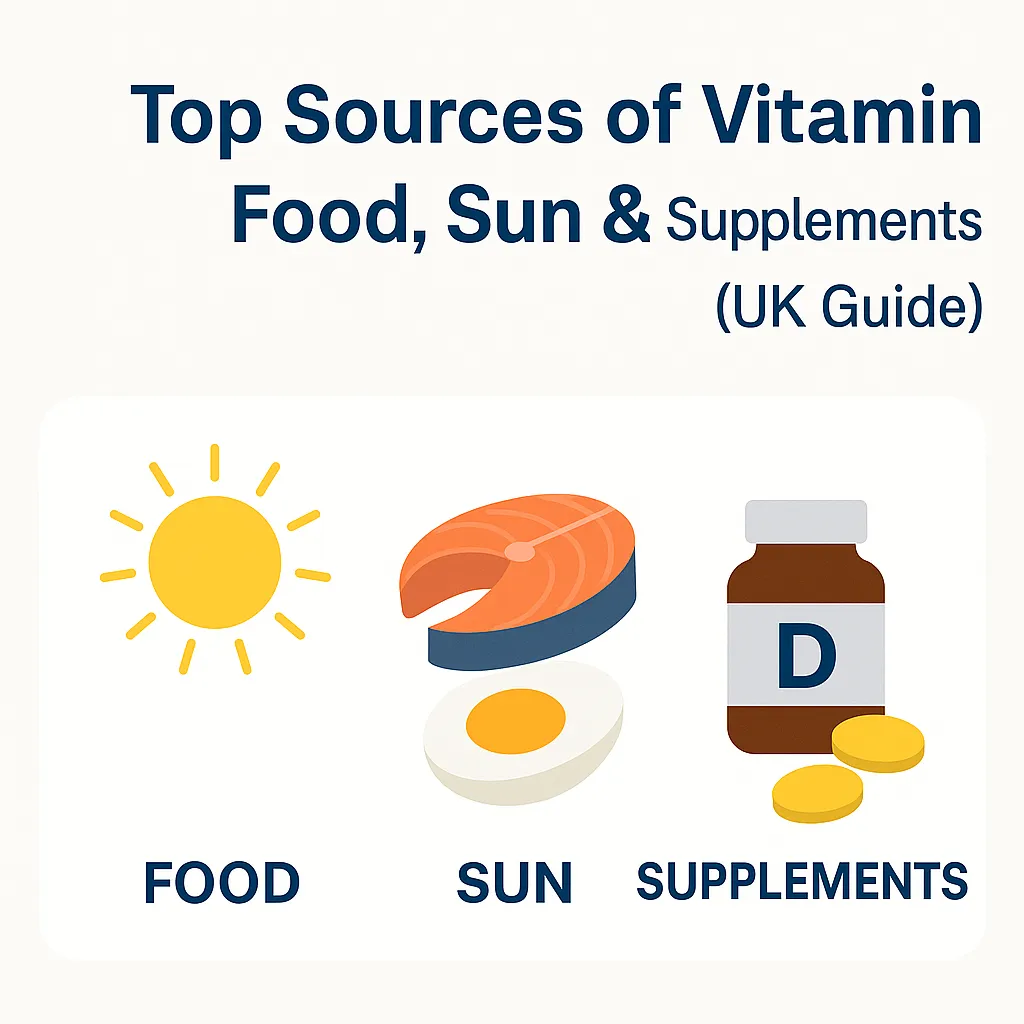
Vitamin D supports bone health, muscle function and immune regulation. Because the body can synthesise it when exposed to sunlight, vitamin D is often called the “sunshine vitamin.” Yet, at UK latitudes, sunlight is only strong enough to trigger vitamin D production during certain months and times of day. Dietary sources are limited, and many people require supplements to meet the recommended intake. This article examines the top sources of vitamin D—sunlight, foods and supplements—in the context of UK public health guidance.
Whether you’re looking to improve your vitamin D levels naturally or need advice on supplements, this guide will help you make informed choices. Use the internal links to visit related pages about daily dosage guidelines, comparing D3 and D2, risk groups and vitamin D deficiency symptoms.
Sunlight: The Primary Natural Source
When Does Sunlight Produce Vitamin D in the UK?
Skin synthesis is the main source of vitamin D for most people, but UVB radiation is only sufficient in the UK between April and September and around midday (11 am to 3 pm). During these months, spending short periods of time outdoors with some skin exposed can generate adequate vitamin D. For more guidance, read our in-depth resource on Vitamin D benefits, deficiency & supplements.
Safe Sun Exposure
Sun safety and vitamin D are closely linked. While short periods of unprotected exposure help produce vitamin D, excessive sun exposure can cause skin damage. Brief unprotected exposure followed by sunscreen is a sensible approach.
Food Sources of Vitamin D
Compared with other nutrients, vitamin D occurs naturally in relatively few foods. Oily fish such as salmon, sardines, mackerel, trout and herring are among the richest natural sources. Egg yolks, red meat, and liver provide smaller amounts, while fortified foods such as cereals and plant-based milks are helpful. Learn more about what vitamin D is and why it’s essential here: What is Vitamin D & why it’s essential.
Challenges for Plant-Based Diets
Vitamin D3 occurs naturally only in animal products, so vegans may struggle to meet needs through diet alone. Plant-based sources include UV-exposed mushrooms and fortified foods, but supplements are often necessary.
Supplements: Filling the Gaps
Because sunlight and food may not always provide sufficient vitamin D, supplements are widely recommended. Everyone aged 4 and over should consider taking a 10 µg vitamin D supplement daily during autumn and winter. Pregnant and breastfeeding women should also take 10 µg daily.
Choosing the Right Supplement
Supplements may contain either vitamin D3 or vitamin D2. Vitamin D3 is more effective at raising serum levels. Vegans should choose lichen-derived D3 or D2. Learn more in our comparison guide: Vitamin D3 vs D2: Which Form Is Better?.
Combining Sources for Optimal Vitamin D Levels
Practical Strategies
To maintain healthy vitamin D levels, aim for a balanced approach:
1) Spend short periods outdoors between April–September,
2) Eat vitamin D-rich foods like oily fish, eggs and fortified products,
3) Use supplements during October–March,
4) Consult a professional if you’re pregnant, breastfeeding, or at higher risk.
Risks of Relying on Sun or Diet Alone
Because of the UK’s latitude and climate, it’s difficult to obtain year-round vitamin D solely from sun exposure and diet. Therefore, supplementation is often essential.
Frequently Asked Questions
Which foods are the best sources of vitamin D?
Oily fish are the richest natural source. Egg yolks, red meat, liver, fortified cereals, fat spreads, and UV-treated mushrooms can also help. See our guide to vitamin D deficiency symptoms and risks here: Vitamin D deficiency: symptoms & risks.
Are vegan vitamin D supplements effective?
Yes, both D2 and lichen-derived D3 are effective and suitable for vegans.
Conclusion
In summary, sunlight, food and supplements each play a role in achieving healthy vitamin D levels. Choose the right combination based on your lifestyle and diet. If in doubt, consult a healthcare professional.