

Food Triggers for Anaphylaxis: Common Foods and Hidden Risks
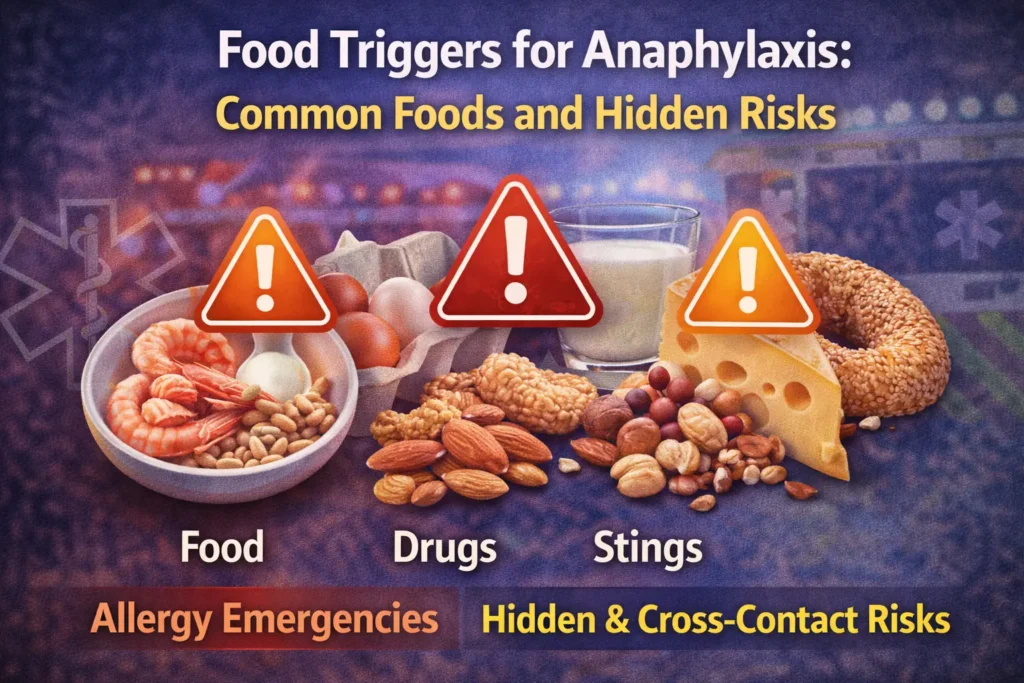
Food is one of the most common triggers of anaphylaxis a severe allergic reaction that can develop rapidly and become life-threatening. NHS guidance lists food as a key cause of anaphylaxis and advises calling emergency services if anaphylaxis is suspected.
This page is part of the anaphylaxis. Start from the main hub here: Anaphylaxis Services (MedCare Health Clinic).
For the complete trigger overview (all causes, not only food), use: What Causes Anaphylaxis?.
What “food-triggered anaphylaxis” actually means
Food-triggered anaphylaxis happens when your immune system reacts aggressively to a specific food protein (the allergen). That reaction can affect:
- Airway (throat tightness, hoarse voice, swelling)
- Breathing (wheeze, chest tightness, shortness of breath)
- Circulation (dizziness, fainting, low blood pressure)
- Often with skin (hives, flushing) and/or gut symptoms (cramps, vomiting)
The danger is not “a strong rash.” The danger is when airway/breathing/circulation are involved that’s when anaphylaxis can become fatal without quick action.
The most common food triggers (top patterns you see repeatedly)
Any food can cause an allergy, but in real-life clinical patterns certain foods show up again and again as severe triggers. MedCare’s own food allergy guidance highlights common severe allergy foods such as nuts, shellfish, dairy, eggs, wheat, soy, and sesame.
1) Peanuts
- Often associated with severe reactions
- Risk increases due to hidden ingredients and cross-contact
- “Trace amounts” can trigger symptoms in some people
2) Tree nuts
Examples include almonds, hazelnuts, walnuts, cashews, pistachios, pecans.
Important pattern: some people react to one specific nut, others react to multiple nuts, and cross-contact between nuts is common in manufacturing.
3) Milk (dairy)
Milk allergy is different from lactose intolerance.
- Allergy can trigger anaphylaxis
- Intolerance causes digestive symptoms but is not anaphylaxis
4) Egg
Egg allergy can range from mild to severe. Watch for egg in:
- baked goods, mayonnaise, sauces, desserts
- “egg glaze” on pastries/buns
5) Fish and 6) Shellfish
These are distinct categories someone may react to fish but not shellfish, or vice versa. Shellfish includes shrimp, crab, lobster, prawns, mussels, etc.
7) Wheat
Wheat can be a trigger on its own, and it can also appear in food-dependent exercise-induced anaphylaxis (FDEIA) patterns in some people (covered fully in the exercise cluster page).
8) Soy
Often appears as soy protein, soy flour, soy lecithin (lecithin is less commonly a severe trigger but still relevant to discuss with a clinician if you have soy allergy).
9) Sesame
Sesame is now widely recognised as a major allergen in many settings and can be hidden in breads, sauces, spice mixes, and takeaway foods.
“Hidden allergens” and why eating out is a major risk pattern
Food-triggered anaphylaxis often happens not because someone intentionally ate a known allergen but because the allergen was hidden, substituted, or cross-contaminated.
The 3 common “how did this happen?” scenarios
- Hidden ingredients
- sauces, marinades, spice mixes, desserts, salad dressings
- Cross-contact (cross-contamination)
- shared fryer oil, shared grill, shared utensils, shared chopping boards
- Label / communication mismatch
- “nut-free” misunderstanding, unclear ingredient list, staff assumption
If you’re seeing repeated reactions with “no obvious trigger,” the broader trigger hub is still the correct next step: What Causes Anaphylaxis?.
Cofactors that can make food reactions worse
A key pattern in anaphylaxis is that some people tolerate a small exposure on one day but react severely on another day. That can happen because of cofactors things that lower your reaction threshold.
Commonly discussed cofactors include:
- Exercise
- Alcohol
- NSAIDs (e.g., ibuprofen in some people)
- Viral illness / fever
- Poor asthma control
- Stress / sleep deprivation (less direct, but can worsen overall reactivity)
This is especially important for FDEIA patterns (food + exercise). The dedicated deep dive will be in your Cluster B6 page, but the key message here is: if reactions seem inconsistent, cofactors may be the missing variable.
How to reduce risk (practical prevention system)
Avoidance is not “just don’t eat it.” It’s a set of habits that reduce accidental exposure.
1) Label reading that actually works
- Read the ingredients every time (recipes and suppliers change).
- Learn your allergen’s synonyms (e.g., casein/whey for milk; albumen for egg).
- Be cautious with “may contain” and “made in a facility that also handles…” if you have a history of severe reactions.
2) Eating out: the simple script that prevents most disasters
When ordering:
- State the allergen clearly: “I have a severe allergy to ___.”
- Ask about cross-contact: shared fryer, shared grill, shared utensils.
- Ask them to confirm with the kitchen not just front staff.
3) Travel / social events: bring your safe backup
- Bring a safe snack/meal when you’re unsure of ingredients.
- Don’t rely on “I’ll figure it out there.”
What to do if symptoms start (food-triggered emergency plan)
If anaphylaxis is suspected, epinephrine/adrenaline is the first-line emergency treatment and should not be delayed. UK resuscitation guidance states intramuscular adrenaline is the first-line treatment for anaphylaxis.
Core safety rule: if airway/breathing/circulation symptoms start treat it as an emergency.
- Use your prescribed adrenaline auto-injector if you have one
- Call emergency services immediately after (NHS guidance emphasises calling 999 for suspected anaphylaxis)
- Do not “wait to see if it passes”
MedCare’s anaphylaxis hub is where you can access the treatment pathway and products if clinically appropriate: Anaphylaxis Services (MedCare Health Clinic).
How doctors confirm the food trigger (without risky self-testing)
A food trigger is typically identified using:
- A detailed history (what you ate, timing, symptoms)
- Allergy testing (skin prick or blood IgE testing)
- Sometimes supervised food challenges in specialist settings (not at home)
Do not deliberately re-expose yourself to “confirm” the trigger that’s how severe reactions happen in the worst possible environment.
Common questions people ask about food-triggered anaphylaxis
“Can tiny amounts really cause anaphylaxis?”
For some people, yes especially with high-sensitivity allergies and cross-contact. That’s why avoidance systems focus on hidden ingredients and shared preparation surfaces.
“Is it always immediate?”
Often symptoms start quickly, but timing can vary depending on the food, amount, and cofactors. If symptoms are progressing, treat it seriously.
“If I only get hives, is it anaphylaxis?”
Not always. But if hives are paired with breathing trouble, throat symptoms, dizziness/fainting, or severe gut symptoms plus systemic signs, it can be anaphylaxis. When in doubt, follow the emergency pathway in Anaphylaxis Treatment.
“Why do I react sometimes but not always?”
That pattern is common when cofactors are involved (exercise, alcohol, NSAIDs, illness) or when exposure levels vary due to hidden ingredients/cross-contact.